


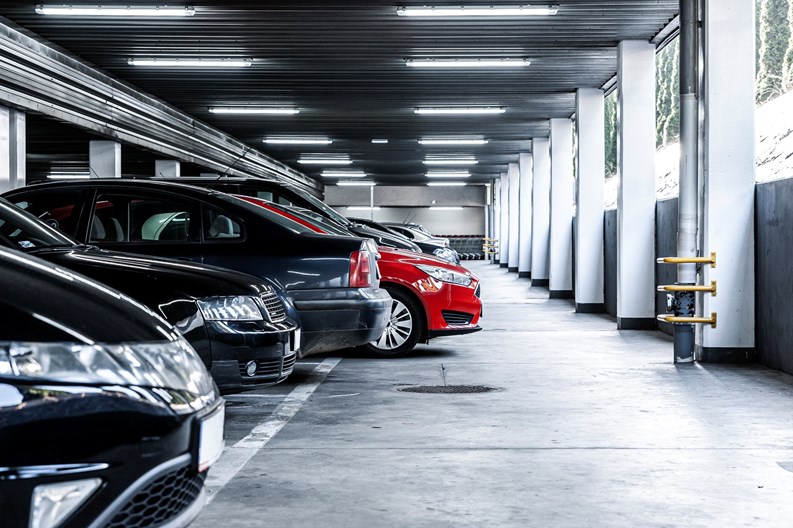
When a parking garage in lower Manhattan collapsed in 2023, killing one person and injuring several others, New York City was forced to confront the fact that many of its parking structures were old, overburdened, under-maintained, and structurally vulnerable. In response, the City enacted Local Law 126 (LL126), mandating periodic, professional structural inspections of all parking structures—including those situated beneath or adjacent to residential co-ops and condominiums.
While few would argue with the safety goals behind the law, the question of who must pay for these inspections—and for the sometimes significant repairs that follow—has become a complicated matter for building owners, boards, and residents.
A Look at LL126
LL126 was established by the New York City Department of Buildings (DOB) to ensure that parking structures are regularly assessed by a qualified professional for structural safety, maintenance, and code compliance. To comply with LL126, building owners must retain a New York State–licensed Professional Structural Engineer who meets the city’s criteria for a Qualified Parking Structure Inspector to design a customized inspection program tailored to the specific garage, taking into account its construction type, age, and exposure to environmental conditions. After evaluating the structure, the engineer submits a compliance report classifying the garage as Safe, Safe With Necessary Repairs or Engineering Monitoring, or Unsafe.
Unlike façade inspections conducted under the City’s more general Façade Inspection Safety Program (FISP), parking structures deemed Unsafe—or even those designated Safe With Repairs and Monitoring—may be forced to close until repairs are complete. For co-op and condo residents, this is a big deal, particularly in Manhattan, where monthly parking spots can rent for as much as a small apartment.
For boards, the law represents significant administrative, legal, and financial pressures that require proactive planning. Inspections must be scheduled with qualified engineers well in advance of deadlines. Governing documents must be reviewed by legal counsel to determine where responsibility lies. Boards must consider how potential garage closures could disrupt revenue streams or resident parking arrangements. And they must be prepared for the possibility that the cost of necessary repairs—particularly structural ones—may be substantial.
What LL126 Actually Requires
The language of LL126 governs what must be inspected, how, and by whom. According to Marcello Tronci, senior structural engineer with the New York office of Illinois-based engineering firm CTL Group, “Local Law 126…mandates periodic inspections and reporting of all parking structures in the city.” The law requires that buildings hire a New York State–licensed Professional Structural Engineer qualified as a Qualified Parking Structure Inspector to conduct these inspections at least once every six years.
Tronci notes that LL126 is part of a broader modernization of city construction codes. According to him, “[The law] mends the Administrative Code of the City of New York, the New York City plumbing code, the New York City building code, the New York City mechanical code and the New York City fuel gas code… to bring such codes and related provisions of law up to date with the 2015 editions of the international building, mechanical, fuel, gas, and plumbing codes.”
The inspection process is deliberately rigorous. Engineers must perform a full conditions assessment, and, Tronci explains, the inspector must design a program “based on the considerations of the type of construction, age of the material components, the parking structure’s specific exposure to environmental conditions and the presence of specific details and appurtenances.” A condition assessment is considered complete only when the inspector conducts a final inspection confirming that the findings in the report accurately reflect the garage’s state.
The resulting compliance report designates the garage as Safe, Unsafe, or Safe With Repairs and/or Engineering Monitoring (SREM). These categories matter, because the consequences for unsafe or SREM garages are substantial.
Who’s Going to Pay for All This?
So who foots the bill for these inspections and repairs? In rental buildings, where documents tend to be cleaner and the ownership structure more unified, responsibility is typically explicit. Leases usually assign structural obligations either to the commercial garage operator or the building’s landlord.
For co-ops and condos however, ownership structures are complex and governing documents vary widely, so determining financial responsibility has become a surprisingly thorny issue—and unlike many building safety mandates, LL126 does not assign responsibility for inspection or repair costs. According to attorney Chris Tarnok, a partner with Manhattan-based law firm DL Partners, “The law doesn’t provide anything with regard to that responsibility.” Instead, he explains, boards must turn to their own internal documents. “It goes to building governance,” he says. “It goes to the bylaws.”
Co-ops, in particular, often rely on proprietary leases drafted long before parking-structure safety became a legal or engineering priority. Attorney Jonharold Cicero, also a partner at DL Partners, notes that “Older documents in long established co-op associations are far less fleshed-out.” As a result, he says, “It’s more likely that every shareholder will have to share the expense of inspections and potential repairs, because the garage is also on a proprietary lease and doesn’t carve out these provisions.” In co-ops, he says, “Responsibility is on the building—not the specific space—but ultimately depends on the documents and their specifics. Leases don’t contemplate who is responsible for those elements. It tends to be a building obligation.”
Condominiums, which divide responsibility between unit owners and the association, add another layer of nuance. Modern condo documents are sharply detailed about structural versus non-structural components, but this wasn’t always the case. As Cicero explains, “Condo bylaws and declarations today are far more extensive than they were, say, 20 years ago.” In older condo buildings, garage-related responsibilities may be only loosely defined, or not defined at all. That ambiguity can lead to disputes over whether the garage is its own unit, a limited common element, or a general common element. Cicero continues: “What if the garage unit is a common element? What is or isn’t a part of the entire building? So, is it the responsibility of the entire condo to maintain, or just the garage condo unit owner?”
Because structural elements are usually common elements, most condo communities ultimately find that the cost of inspections and repairs must be shared among all unit owners according to their percentage of common interest. That includes repairs to columns, slabs, ramps, drainage systems, and any other structural components that intersect with or support the larger building.
According to legal pros, this is the heart of the LL126 dilemma: the law tells buildings they must inspect and repair their garages—but it leaves them entirely to their own documents to navigate the financial consequences.
Closures, Consequences, & New Pressures on Boards
Under FISP, unsafe façade conditions don’t always require immediate closure; they can sometimes be mitigated with protective measures. Under LL126, however, a parking garage designated as Unsafe—or even SREM—may have to close immediately and stay closed until repairs are completed. For co-ops and condos that rely on parking revenue, or whose residents depend on on-site parking, this is a big problem.
Most inspections can be completed within one or two weeks, depending on size and condition, but structural repairs often take far longer, and can cost hundreds of thousands or even millions of dollars. This reality has pushed boards across the city to seek proactive assessments rather than wait for deadlines or DOB enforcement notices.
In communities accustomed to annual budgets and predictable capital projects, the rapid rollout of garage inspections is yet another shock to the system—arriving amid a broader wave of new safety regulations affecting everything from façades to boilers. Even so, Tarnok notes that “there have been only a handful of inspections done in lower Manhattan and the Upper West Side to date.” Brooklyn and the remaining portions of Manhattan are scheduled next, followed by Queens and the Bronx.
The Real Work for Boards Begins Now
LL126’s demands are not simply technical—they are administrative, legal, and financial. Boards must review their governing documents, retain qualified engineers, revise budgets, and communicate with shareholders or unit owners who may not realize that garage safety is now a building-wide responsibility.
Cicero and Tarnok both emphasize the importance of clarity and preparation. They urge boards to identify exactly which components of their parking facility are designated as structural, which are unit-level, and which fall under limited or general common elements. Only by understanding those distinctions can buildings determine who pays—and how much.
As Cicero puts it, “They should be looking at their docs now to be ready when the inspection is done.”
More to Come…
As significant as LL126 is, it may soon be only the foundation for a more assertive regulatory framework. The 2023 collapse accelerated legislative momentum. The City Council passed a package of new measures—Intro 0135-2024, 0170-2024, and 0231-2024—that are expected to tighten requirements even further. If these bills are enacted, boards will face shorter cycles, stricter oversight, and the potential for steep penalties.
Attorney William McCracken, a partner at Moritt Hock & Hamroff LLP in Manhattan, outlines the changes. Regarding Intro 0135-2024, he says: “The new regulations… will require the New York City Department of Buildings (DOB) to conduct a load-bearing capacity study for parking garages, including analysis of the effects of age, its condition, size, how often the garage is at or exceeds capacity, structural integrity, and its exposure to environmental conditions.”
Another bill, 0170-2024, raises the cost of noncompliance dramatically. McCracken explains that “another component of the bill… will double the civil penalties for DOB-enforced violations… including minimum fines of $20,000 for ‘immediately hazardous’ violations.” And a third measure, 0231-2024, compresses the inspection cycle: “It will also require that condition assessments of parking structures be conducted once every four years, down from the current six-year cycle originally established by Local Law 126.” It further requires follow-up assessments within two years for garages deemed SREM.
Local Law 126 represents a major shift in how New York protects the public from structural failures. For co-op and condo boards, compliance is no longer optional, and preparation is no longer something that can be deferred until next year’s budget cycle. Understanding your building’s documents, reviewing the condition of your garage, and preparing financially for potential repairs are now essential responsibilities. Ultimately, the law’s message is simple: safety comes first—and boards must be ready to meet that obligation.



Leave a Comment